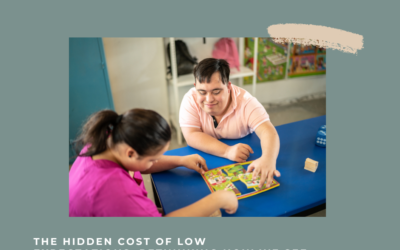
Many services for adults with intellectual and developmental disabilities (IDD) unintentionally cause harm through low expectations. This subtle issue often goes unnoticed, masked by good intentions and safety concerns. Low expectations manifest in everyday choices,...
Staff & Team Development
Enhanced Programming through Integration
Service delivery models have traditionally separated individuals based on diagnosis, ability level, or perceived need. In many conventional day programs, participants with elevated medical or physical requirements are grouped together, while those with primarily...
Innovation Without Limits: Building the Next Generation of Day Services
For too many years, the traditional Intellectual and Developmental Disabilities (IDD) day program model has remained largely unchanged. Many programs have functioned primarily as supervised spaces where individuals spend their day, rather than environments...
The Quiet Power of Modeling Behavior in Autism Support
There’s a common moment in programs that serve individuals with autism: a client becomes overwhelmed. Suddenly, the room feels much louder, and instructions are given rapidly, “Use your words.” “Take a breath.” “Calm down.” In these instances, the initial instinct is...
Seeing the Possibilities, Not the Limitations: A Professional Approach to Supporting Adults with IDD
Within the field of disability services, professionals frequently participate in training sessions on person-centered planning. This approach emphasizes developing individualized plans that prioritize the goals, aspirations, strengths, and choices of the individual,...
You’re as Good as Your Team
Over a long career in the disabilities field, I have noted that several foundational principles have emerged. These principles form the basis for effective programs and successful outcomes. They reflect the vision and core beliefs of individuals who advocate for the...